
Lisbon consistently tops the lists of safest European cities for solo female travellers — and from our front door on Rua São Nicolau, we've watched thousands of women arrive alone and leave with friends, confidence, and plans to return. Here's the honest, practical guide.
Lisbon consistently ranks among the safest cities in Europe for solo female travellers. On global safety indices, Portugal places in the top five most peaceful countries in the world — and Lisbon, as its capital, reflects that. But we can also tell you from the view of our front desk on Rua São Nicolau: roughly half our solo guests at any given time are women travelling alone, and the overwhelming majority describe Lisbon as one of the most comfortable and welcoming cities they've ever visited. This guide covers everything you actually need to know, from neighbourhood safety specifics to the best ways to build a social life from scratch.
Is Lisbon Safe for Solo Female Travellers?
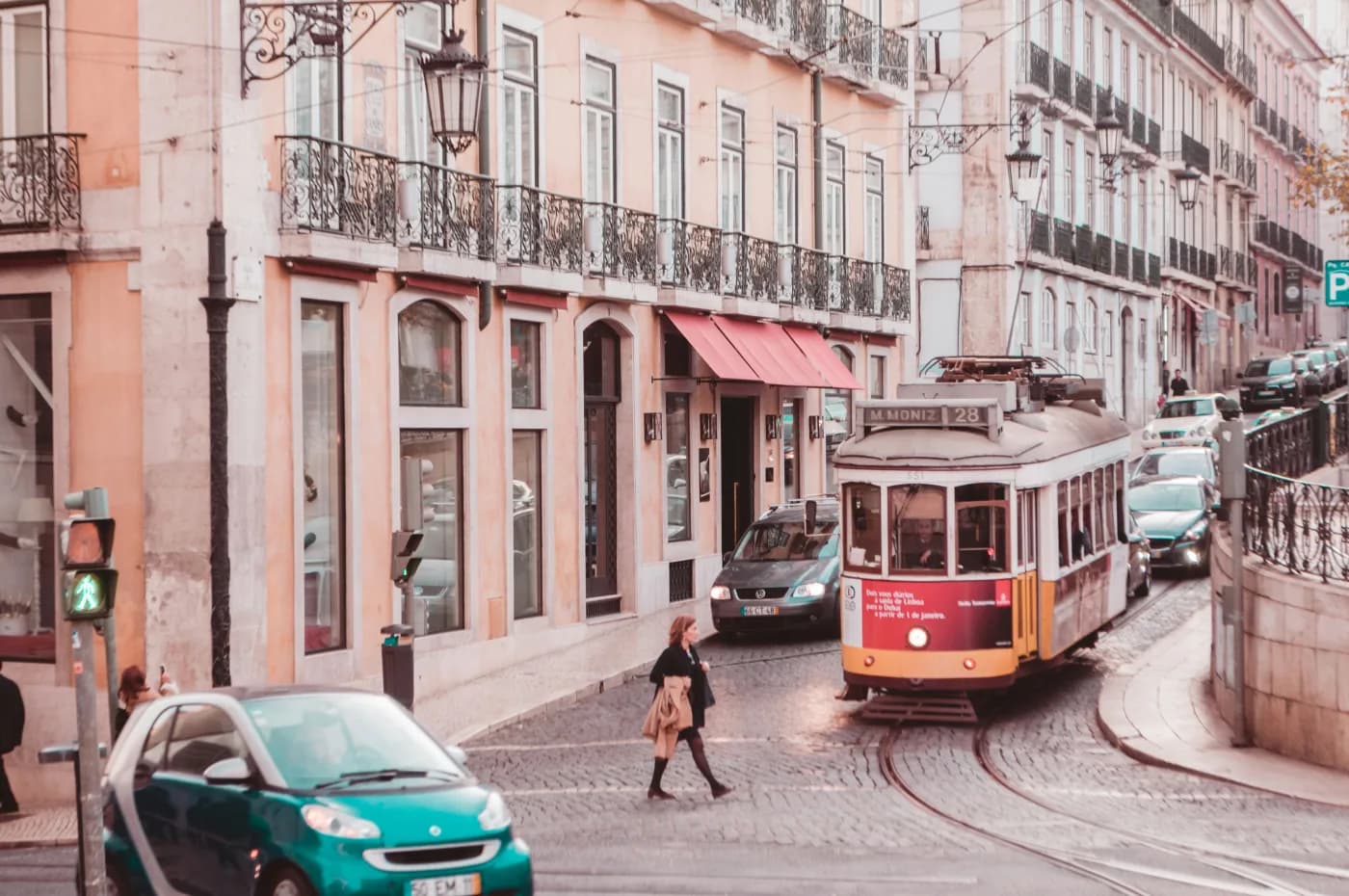
Yes — and genuinely so, not just in a tourism-board way. Portugal places consistently in the top five on the Global Peace Index, and violent crime against tourists is extremely rare. The culture of street harassment that characterises some Southern European cities is notably absent in Lisbon — it's a tolerant, cosmopolitan city where women walking alone at night is completely normal, not exceptional. The main practical risks are the same as any popular European city: pickpockets in crowded tourist areas (Tram 28E and the narrow streets of Alfama are the most common spots), and standard late-night sensible precautions in any isolated area. Lisbon is also one of the most LGBTQ+ friendly cities in Europe — the city's Pride (Arraial Lisboa Pride) is one of the biggest in the country, and a general culture of tolerance and inclusion extends to how public spaces feel.
Best Neighbourhoods to Base Yourself
Baixa-Chiado is the ideal base for a first solo trip — central, well-lit, busy until late, and within walking distance of everything. Lisbon Lounge is right here, on Rua São Nicolau, which means Alfama is a 15-minute walk, Bairro Alto is 10 minutes, and the Tagus waterfront is 5 minutes. Alfama is magical but navigationally tricky — the steep, winding lanes can feel isolated once you're away from the main tourist routes after dark. Visit it constantly, but return to a central base at night until you know the layout. Bairro Alto is safe and lively for evenings out — the street-party format means streets are full of people from 10pm onwards. Mouraria, Intendente, and Graça are all excellent for daytime exploration; Mouraria in particular has been significantly regenerated and is now a vibrant, multicultural neighbourhood.
Getting Around Alone — Day and Night
During the day, central Lisbon is almost entirely walkable. The Metro covers longer distances efficiently and is clean, well-staffed, and used by locals rather than just tourists. Trams are charming; Tram 28E is notorious for pickpockets due to how densely packed it gets — keep your phone and wallet in a zip-close bag and ideally a front pocket. For late-night journeys, Uber and Bolt both operate reliably in Lisbon; drivers are generally professional, cars are tracked, and prices are reasonable. Walking home along the main streets from Bairro Alto to Baixa after midnight is completely normal — these are busy, well-lit routes used by thousands of people every night. Lisbon has very few areas to avoid as a solo woman after dark; the usual city-smart instincts apply.
Building a Social Life from Zero
Meeting people as a solo female traveller in Lisbon is far easier than in most cities. Social hostels like Lisbon Lounge are built around this: communal breakfast is the daily reset point where you meet whoever else checked in overnight. The weekly pub crawl is consistently the most popular event — four bars, a club, drink deals, and a group of 10–20 people who mostly arrived alone and leave together. If bar-hopping isn't your style, the communal dinners (Monday, Wednesday, Friday) are a more relaxed way to build connections over food. Beyond the hostel: LX Factory on Saturday afternoons has a naturally friendly, social atmosphere. The Lisbon travel community on Instagram and in groups like Girls Love Travel often has active Lisbon threads where meet-ups are organised — worth checking before you arrive.
Female-Only Dorms: What to Expect
Lisbon Lounge offers 4-bed, 6-bed, and 10-bed female-only dorms alongside mixed dorms and private rooms. Every female dorm includes keycard access, individual power points and USB chargers at every bunk, reading lights, and privacy curtains. Each female dorm also has dedicated makeup tables with light-up mirrors, hair dryers, and straighteners built in — so there's zero competition for bathroom time in the morning and you can get ready properly without rushing. The atmosphere in female dorms tends to be different from mixed dorms: quieter, more co-operative, and often more social in a lower-key way. Many of our strongest friendship groups started in the female dorms. If it's your first hostel experience or you want more privacy without going all the way to a private room, the 4-bed female dorm is the sweet spot.
Nightlife as a Solo Woman in Lisbon
Lisbon nightlife is genuinely enjoyable as a solo woman — not something to be managed or endured. Bairro Alto's street-party format means you're always surrounded by other people; the whole neighbourhood is effectively one large communal outdoor bar from 10pm onwards. Cais do Sodré and Pink Street have a mixed, international crowd and a generally good atmosphere. Lux Frágil and Ministerium (the main clubs) have professional door staff and a culture that feels relatively safe compared to equivalent venues in other European cities. Standard sensible precautions apply everywhere: keep drinks in your possession, share your location with someone, know your route home before you leave. Most solo women who've done the Lisbon nightlife circuit tell us it felt noticeably more relaxed and respectful than London, Berlin, or Barcelona.
Activities That Work Especially Well Solo
Certain Lisbon experiences are particularly good when you're alone. The Museu Nacional do Azulejo (tile museum, in a beautiful old convent east of the centre) is deeply absorbing for a solo afternoon — stunning, quiet, and the kind of place you spend two hours without noticing. The Feira da Ladra flea market on Tuesday and Saturday mornings in Alfama is browsable and friendly. Surf lessons at Costa da Caparica through the hostel are a group activity by nature — you'll share a lesson with four or five others, and the session has a built-in social structure. Day trips to Sintra are excellent solo — the train from Rossio puts you in the heart of the town in 40 minutes, the palaces are self-guided, and you'll almost certainly meet other travellers at every viewpoint.
Day Trips Worth Doing Alone
Sintra is the essential day trip — a UNESCO World Heritage town 40 minutes by train from Rossio station, with fairy-tale palaces (Pena Palace, Quinta da Regaleira, Monserrate) and stunning forest viewpoints. Buy Pena Palace tickets in advance. Cascais is a lovely half-day: train from Cais do Sodré along the coast, ending in a pretty seaside town with excellent seafood and a relaxed, safe atmosphere. The Setúbal peninsula and Arrábida Natural Park are spectacular (dramatic cliffs, crystal-clear water) but require a car or organised tour — bookable through the hostel. Costa da Caparica for a beach day is simple: ferry from Cais do Sodré to Cacilhas, then the bus south — a full afternoon of Atlantic beach for under €5 in transport.
Practical Tips
Shoes: Lisbon's cobblestones are beautiful and uneven — comfortable walking shoes are non-negotiable. Bag: a crossbody with a zip closure is better than a handbag in crowded areas. Phone: front pocket on Tram 28E and in Alfama, always. Portuguese farmácias (pharmacies) are excellent — pharmacists typically speak English and can advise on most minor medical needs without a GP appointment. Health cover: EU citizens should carry their EHIC card; non-EU travellers should ensure travel insurance includes medical coverage. Currency: Portugal uses euros, and card payments are accepted almost everywhere in central Lisbon. Tap water is safe to drink throughout the city.
Frequently Asked Questions
Is Lisbon safe for solo female travellers at night? Yes — the main nightlife areas (Bairro Alto, Cais do Sodré, Baixa-Chiado) are busy and well-lit until very late. Walking home along the main streets after midnight is standard. Standard precautions — keeping valuables secured, knowing your route home — apply. Are female-only dorms available in Lisbon? Yes — Lisbon Lounge offers 4-bed and 6-bed female-only dorm options with dedicated vanity areas and keycard access, alongside mixed dorms and private rooms. Is there much street harassment in Lisbon? Much less than many Southern European cities. Lisbon has a notably tolerant, cosmopolitan culture, and catcalling is not a dominant feature of everyday life here. How do I meet people as a solo female traveller? The easiest route is through a social hostel. Communal dinners, walking tours, and pub crawls at Lisbon Lounge are specifically designed to connect solo travellers. Most guests arrive alone and leave with a group.
We've been welcoming guests to Lisbon since 2005. Our team lives in the city year-round and updates these guides with fresh insights from staff and guests alike.